Automatic Fire Suppression vs Handheld Fire Extinguishers in Agriculture
By Ben Robinson on Jun 15, 2026, 4:51:14 PM
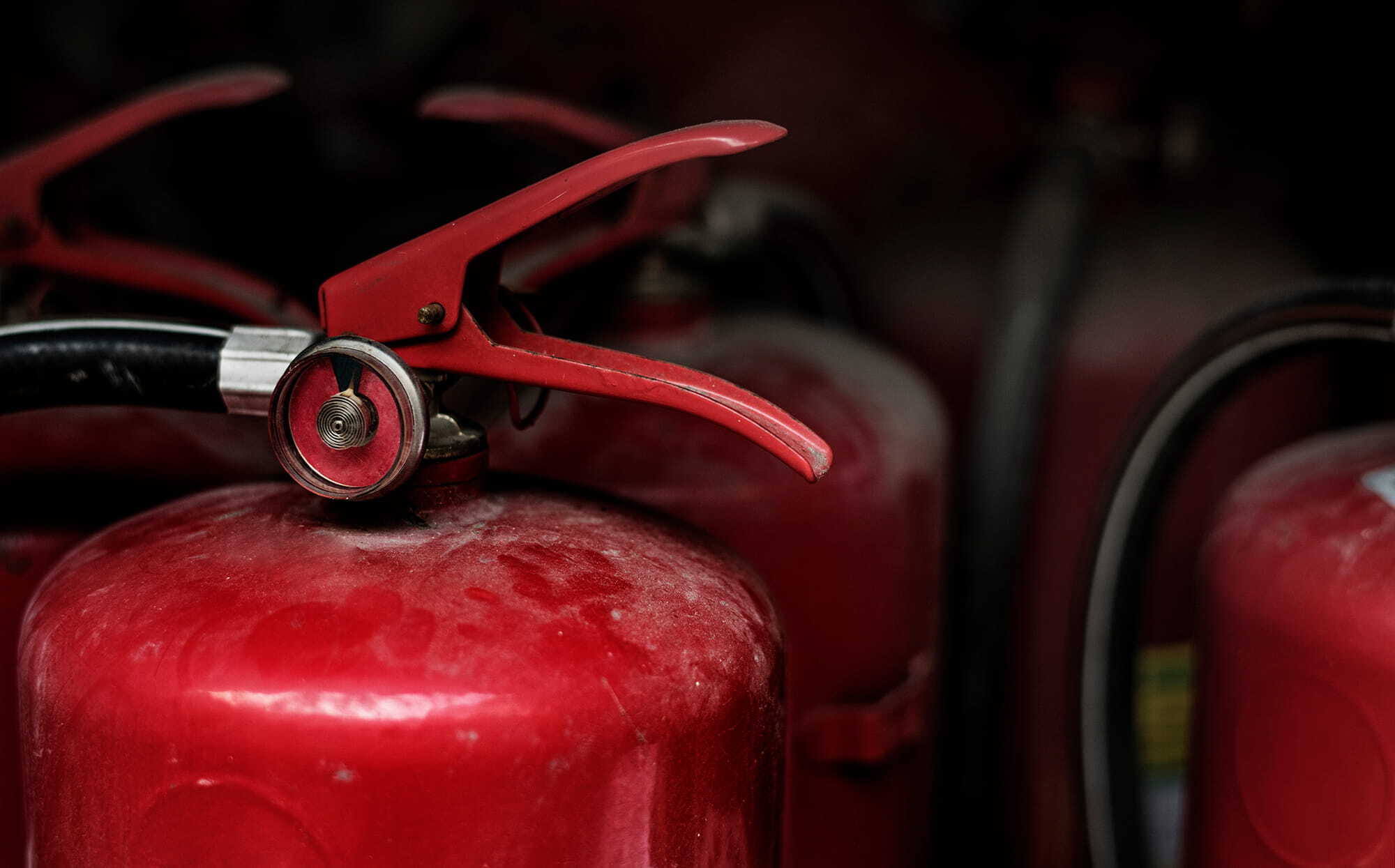
Many farmers and agricultural business owners assume a dry powder fire extinguisher is all the protection their machinery needs. It's an understandable assumption given that extinguishers are familiar, inexpensive and a regulatory necessity. But on modern agricultural equipment, that assumption can cost your entire machinery.
Agricultural machinery fires never give you time to think. Dry crop debris, hot engines, hydraulic leaks and long working hours create perfect conditions for a small spark to become a total loss within minutes. So while a fire extinguisher feels like enough, in practice, it rarely is.
Below, you’ll learn the specific ways why passive fire protection methods are insufficient on farms and why automatic fire suppression systems are an essential piece of equipment.
Handheld Extinguishers are No Match for Fast-Moving fires
A handheld extinguisher only works if everything goes right at the worst possible moment. You have to notice the fire, stop the machine, get out of the cab and find the ignition point all before the flames spread.
In agriculture, that sequence rarely plays out in time.
Fires on combines, balers, tractors, telehandlers, skid steers and ATVs usually start in out-of-sight places like engine bays and hydraulic systems. By the time you notice, the fire may have already spread. Open a panel to reach the flames, and you feed the fire oxygen. making it spread faster.
Reliability is the second problem. Constant machine vibration degrades handheld units that aren’t vibration tested in the following ways:
- Powder compacts and cakes inside the cylinder
- Discharge pressure drops
- The unit can fail at the exact moment it's needed
In short, by the time a fire extinguisher is in your hands, it might be too late. The fire is often already fully developed and beyond what a handheld unit can control.
Automatic Suppression Detects and Suppresses Fires Without Operator Intervention
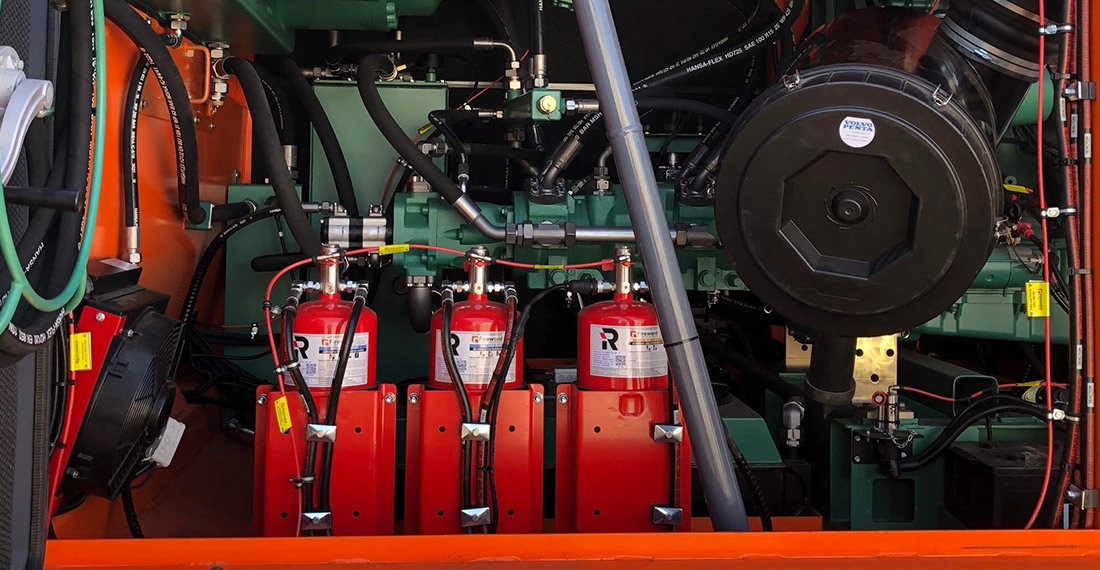
Agricultural machinery fire suppression systems can be retrofitted into almost any piece of equipment, from combine harvesters to square and round balers. They use a pneumatic detection method consisting of pressurised tubes that cover the highest-risk areas of the equipment, including:
- Hydraulic hoses
- Electrical systems
- Engine compartments
- Dust and chaff build-up areas
When the tubes are exposed to heat or flame exceeding 180°C, they rupture at the exact point of ignition. This results in an instantaneous pressure drop, opening the cylinder valve and discharging the suppression agent through the strategically placed nozzles in seconds.
Pneumatic detection means there is no delay or reliance on human intervention. Because the system acts at the source within seconds, fires are controlled while they're still small and often before the operator is even aware there's a problem.
Here’s how fire extinguishers and automatic suppression systems compare head-to-head:
|
Handheld extinguisher |
Automatic suppression |
|
|
Speed of response |
Delayed |
Instant |
|
Ease of use |
Fully manual |
Fully automatic |
|
Effectiveness at source |
External, often too late |
Internal, at the source |
|
Reliability |
Vulnerable to vibration and missed maintenance |
Built for harsh environments |
|
Operator safety |
Operator exposed to the fire |
No operator risk |
|
Cost |
Low upfront costs, limited protection |
Higher upfront costs, prevents total loss, downtime, and rising premiums |
|
Accreditations |
Basic compliance |
Tested to P-Mark SPCR 199 and AS-5062:2016 |
As you can see, the fundamental difference between handheld extinguishers and automatic fire suppression systems lies in reaction versus prevention.
A dry powder extinguisher depends on a person spotting the fire and responding correctly under pressure. Automatic suppression removes that dependency entirely. In agriculture, where seconds decide whether you lose a hot spot or a whole machine, that difference is everything.
Why Automatic Fire Suppression is Vital in Agriculture
Automatic fire suppression isn’t just a case of eliminating the need for human intervention. It’s also about protecting valuable equipment that operates in some of the most fire-prone conditions of any industry.
Several factors combine to make ignition more likely and spread far faster than most operators expect:
- A constant fuel source. Dry crops, chaff, straw and dust accumulate across the machine throughout a working day. These materials are highly combustible and collect precisely where heat builds up.
- Sustained heat build-up. Harvest and cultivation often mean long shifts with little downtime. Engines, exhaust systems, brakes and bearings run hot for hours, and a worn bearing or seized component can reach ignition temperature on its own.
- Limited access slows everything down. Many fires start in enclosed engine bays and compartments that are difficult to reach quickly. Opening them to fight the fire introduces oxygen and further accelerates the fire.
- Electrical faults. Ageing wiring, rodent damage, vibration-loosened connections and overloaded circuits can all spark fires in concealed areas, frequently while the machine is unattended or even switched off.
It’s these reasons why experienced farmers like George Young of Fobbing Farm, Essex, trusts Fireward to protect their valuable equipment.
George describes Fireward’s automatic fire suppression system as “a bit of a no-brainer,” and installed the system on his Claas Lexion 660 combine harvester ahead of harvest season.
“It works out at around 2% of the value of the new machine, a really small investment considering what’s at stake."
Why Arable Farms Choose Fireward
Not all fire protection is equal, and choosing the right partner matters as much as choosing the right system.
Here are the reasons Fireward is trusted by farmers and contractors across the country:
- 24/7 protection. Our system is operational 24/7, 365 days a year, with no manual intervention or power required
- Ultra-fast fire detection. Our system is the fastest-acting on the market and offers the best protection
- 3-Year warranty. We offer all customers a three-year parts and labour warranty as standard, system servicing to be done by our nationwide team of engineers every 12 months for combines.
- Full accreditation. All our systems are third-party certified to P-Mark SPCR183, P-Mark SPCR199 and AS-5062:2016.
- Additional safety features. We cover every eventuality with in-cab monitoring, battery isolation, machine shutdown and manual actuation.
For members of NFU Mutual, there is even a 15% discount on combine insurance premiums with a Fireward automatic fire suppression system installed.
Relying on a handheld extinguisher alone is a gamble. In most cases, it will already be too late. Automatic protection, on the other hand, gives you time, reliability and proven performance.
A total loss does not just mean replacing the machine; it can also increase insurance premiums and long-term costs. Protect your equipment with Fireward’s automatic fire suppression systems.
Get a quote today and protect your agricultural machinery before a small fire becomes a total loss.
Fireward, Protecting People and Assets 24/7.
To find out more about Fireward’s Automatic Fire Suppression systems, get in touch by calling 0800 151 0249 or email at: sales@fireward.co.uk
You May Also Like
These Related Stories
The Cost of Fire to Your Business: Could You Survive?
Protecting a Case IH 9250: Fireward's Fire Suppression Retrofit