

What are Fire Suppression Systems and how do they work?
Fire suppression systems are designed to detect and suppress fires automatically, protecting machinery, vehicles and equipment from damage. They work by identifying heat or fire conditions and releasing a suppression agent to control or stop the fire at its source.
Fire Suppression System Detection Methods
Pneumatic Fire Detection
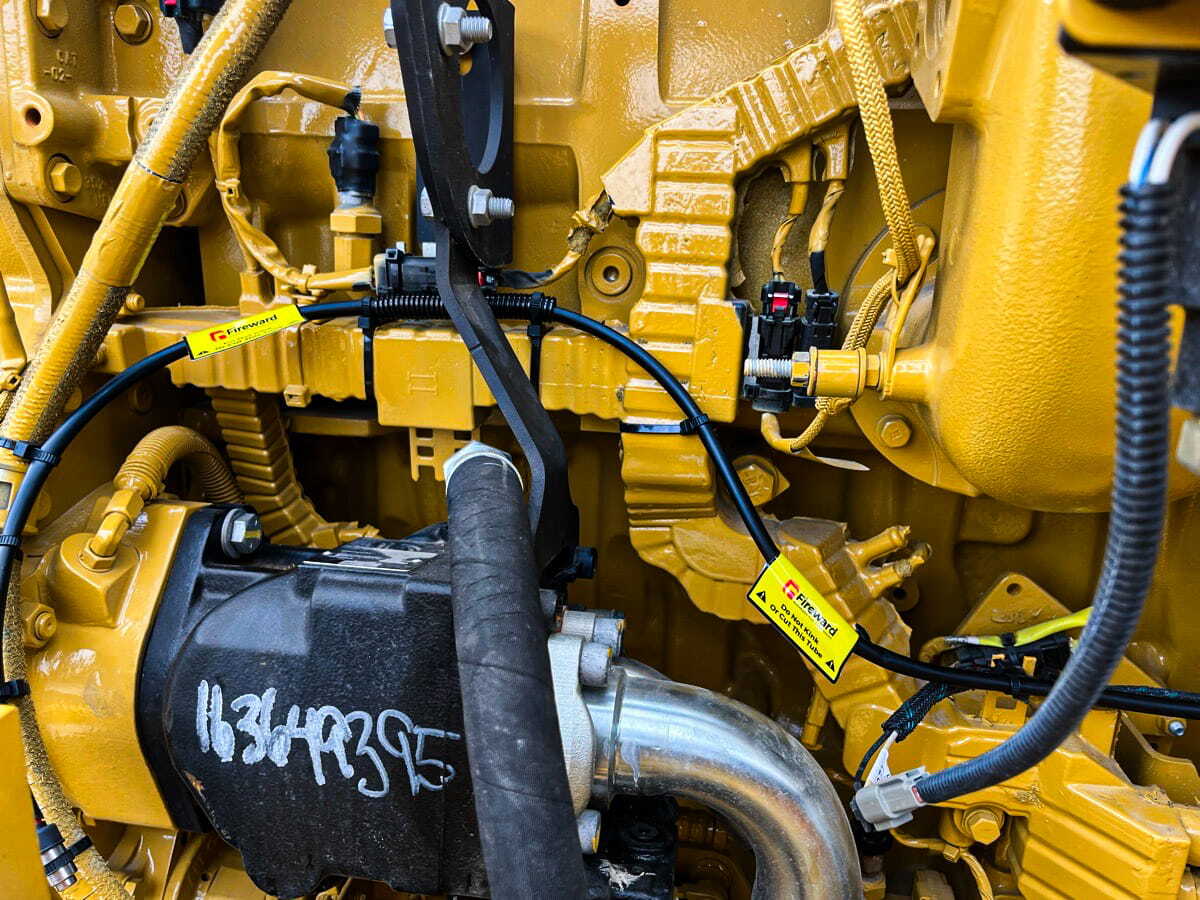
Pneumatic fire detection systems use a nitrogen-filled tube fitted around high-risk areas such as engine bays, turbochargers and DPFs. The tubing bursts at approximately 180°C, releasing nitrogen and activating the cylinder valve. This triggers the discharge of the suppression agent, either through the tube itself or via a network of hoses and nozzles.
Electronic Linear Fire Detection
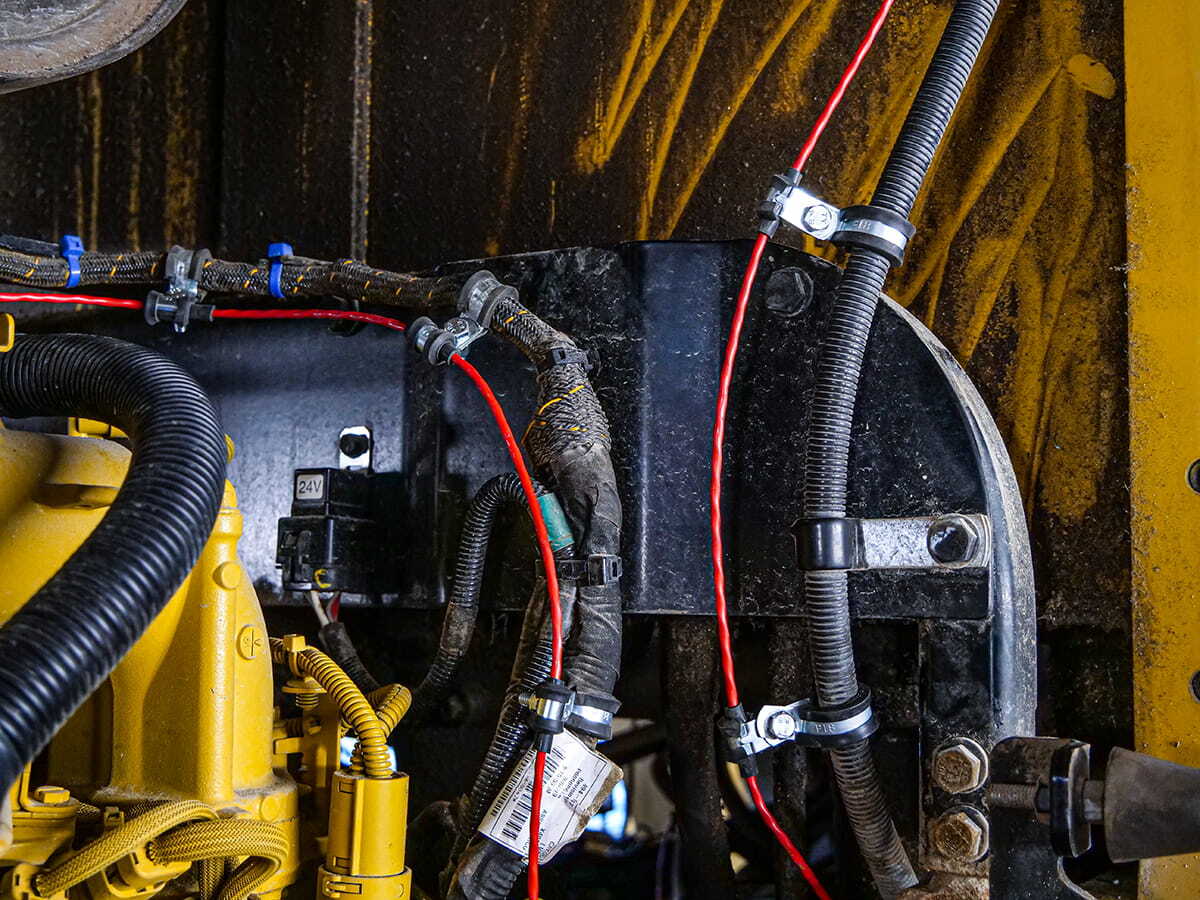
Electronic linear detection uses heat-sensitive cable to provide continuous temperature monitoring along its length. The cable contains conductors separated by heat-sensitive insulation, which melts at a predetermined temperature. When this happens, the conductors come into contact, creating a short circuit that signals the control unit to activate the fire suppression system.
Types of Fire Suppression Agents
Dual Agent Fire Suppression
ABC Dry Powder and FFF Wet Chemical
Dual agent fire suppression systems combine dry powder and wet chemical to deliver fast knockdown and cooling. Dry powder rapidly extinguishes flames, while wet chemical cools hot surfaces and helps prevent re-ignition.
This combination makes dual agent systems effective in high-risk environments such as heavy machinery and vehicle engine bays, where both immediate suppression and post-fire cooling are critical.
Single Agent Fire Suppression
ABC Dry Powder
Single agent fire suppression systems use dry powder to deliver rapid fire knockdown. The powder interrupts the chemical reaction of the fire, quickly extinguishing flames and preventing further spread.
These systems are widely used in smaller mobile machinery, vehicles and industrial environments where fast, effective suppression is critical.
Clean Agent Fire Suppression
Reacton 1230 or FM-200
Clean agent fire suppression systems use gas-based agents to extinguish fires without leaving residue or damaging sensitive equipment.
Reacton™ 1230 is a fluorinated ketone discharged as a gas. It is similar to the widely recognised 3M™ Novec™ 1230 and is electrically non-conductive, leaving no residue after discharge.
FM-200™, also known as HFC-227ea, is a clean agent stored as a liquefied gas. It is electrically non-conductive, odourless and colourless, making it suitable for protecting sensitive equipment.
Watch our Dual Agent System in action
Fireward is a leading and authorised distributor of Reacton Fire Suppression Ltd. supplying automatic fire suppression systems from their UK based global headquarters. Here the designing, manufacturing, and testing of all Fireward products occur in strict ISO 9001:2015 certified facilities. With all products being recognised by the Made in Britain association, Reacton holds a range of globally recognised approvals. Fireward systems are certified to P-Mark 199, P-Mark 183, UNECE R107 Regulations, AS-5062:2016, ISO 9001:2015 and LPCB LPS 1666.
Additional Safety Features
Direct Release
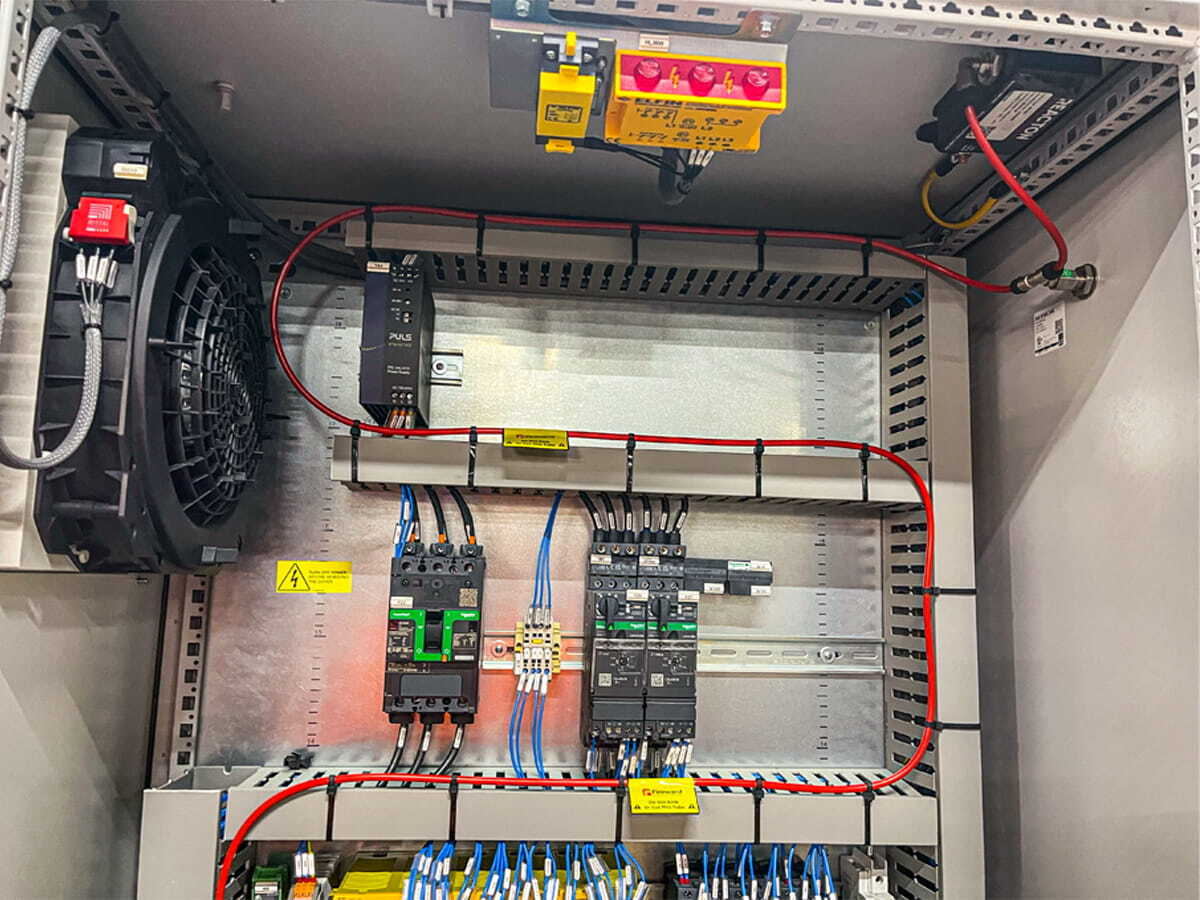
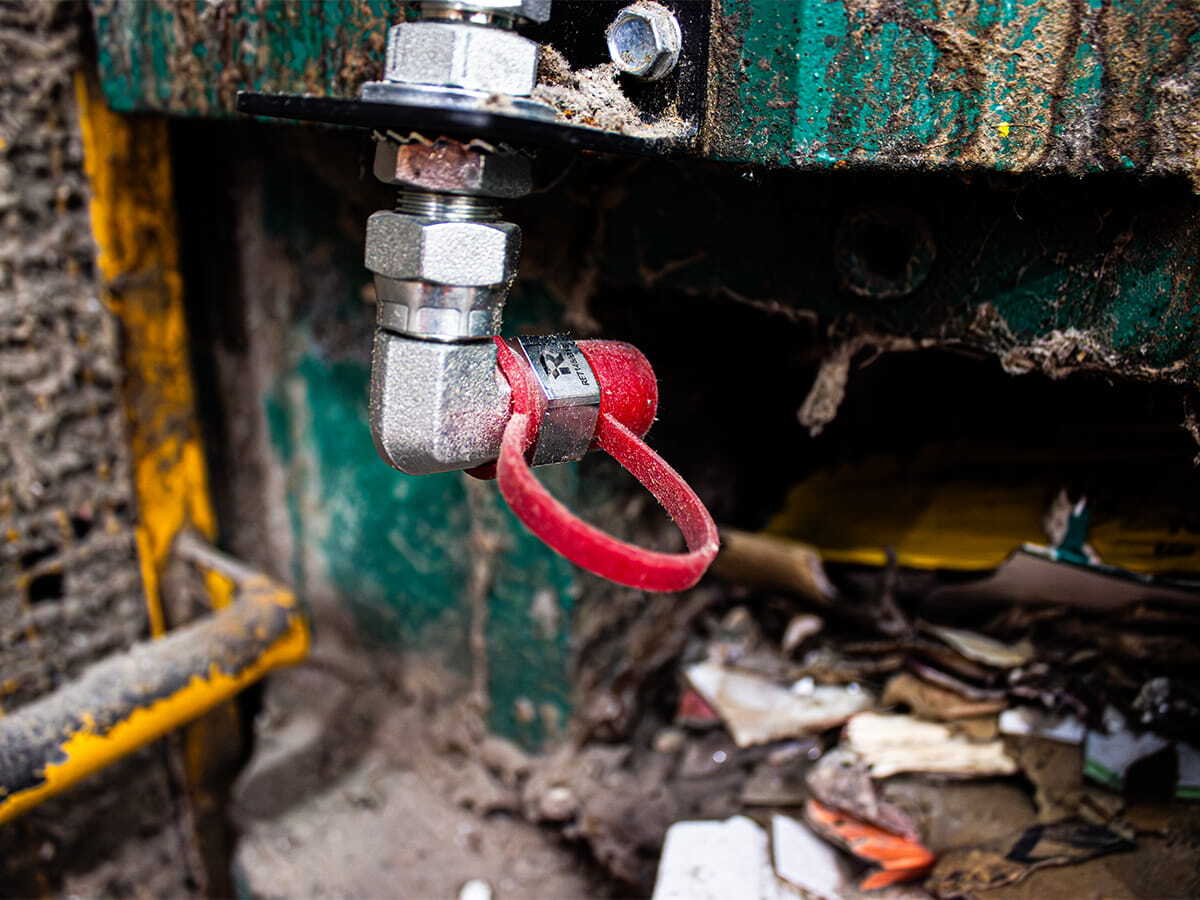
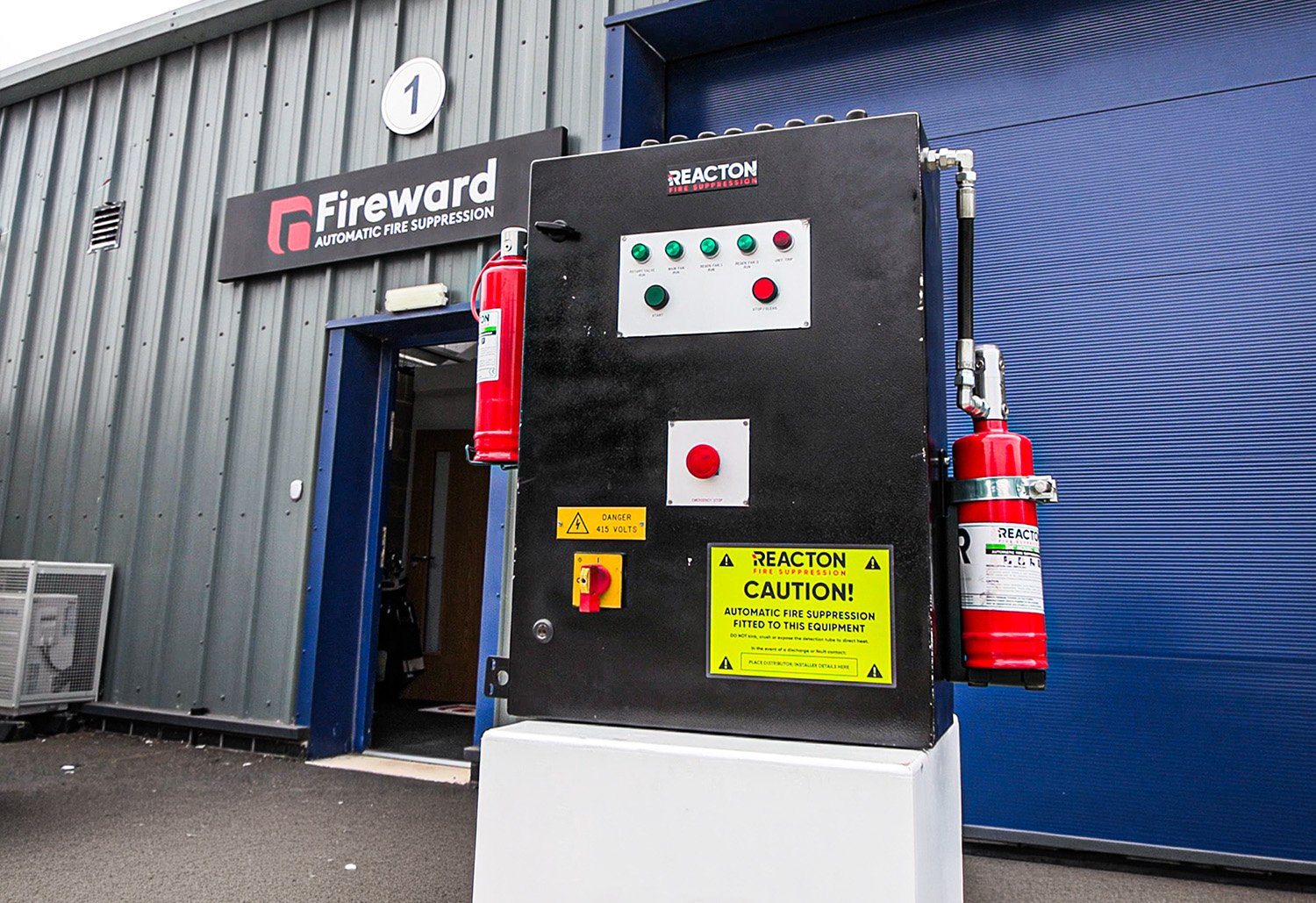
Direct release fire suppression systems discharge the agent at the point of detection, targeting the fire at its source.
They are commonly used to protect electrical cabinets, control panels and CNC machinery. Heat causes the detection tubing to rupture, triggering the release of clean agent directly through the burn hole to suppress the fire.
This provides fast, localised suppression while limiting damage to surrounding equipment.
Indirect Release
Indirect release fire suppression systems use pneumatic or electronic linear detection to trigger the discharge of suppression agent through a network of hoses and nozzles. This allows coverage across larger or enclosed areas.
They are commonly used in machinery and vehicle applications where multiple fire risks need to be protected. Detection of heat activates the system, releasing the agent through strategically placed nozzles to suppress the fire.
Approvals and Memberships
Why Use a Fireward Automatic Fire Suppression System?
As the UK’s market leader in fire suppression, we understand the importance of protecting your vehicles and equipment. Our systems are certified to the highest standards, fully automatic and tailored to your needs, to give you complete protection day or night.
Ultra-Fast Detection
At Fireward, we have multiple fire suppression systems designed to tackle fires in a matter of seconds.
24/7 Protection
All our systems are pressurised and require no power to ensure round-the-clock protection.
Approved Systems
We are accredited to the highest standards, giving you peace of mind and making it easy to obtain insurance cover.
Our fire suppression systems FAQs
Fireward supplies a range of advanced fire suppression systems designed for diverse applications across multiple industries. These include Dual Agent systems with the combined benefits of dry powder and wet chemical agents, Single Agent dry powder systems for rapid fire knockdown, and Clean Agent systems using Reacton™ 1230 and FM-200™ for residue-free electrical fire protection.
Fireward’s automatic fire suppression systems use two proven detection technologies: pneumatic detection, which ruptures a nitrogen-filled tube under heat to trigger discharge, and electronic linear detection, which signals and a raipid activation to deploy suppressant. Both systems are designed to detect fire quickly and activate without requiring external power.
A Dual Agent system combines dry powder for fast fire knockdown with a wet chemical agents that provide cooling to prevent re-ignition. This hybrid approach offers rapid fire suppression and enhanced protection, making it ideal for high-risk environments such as vehicle fire suppression and industrial machinery.
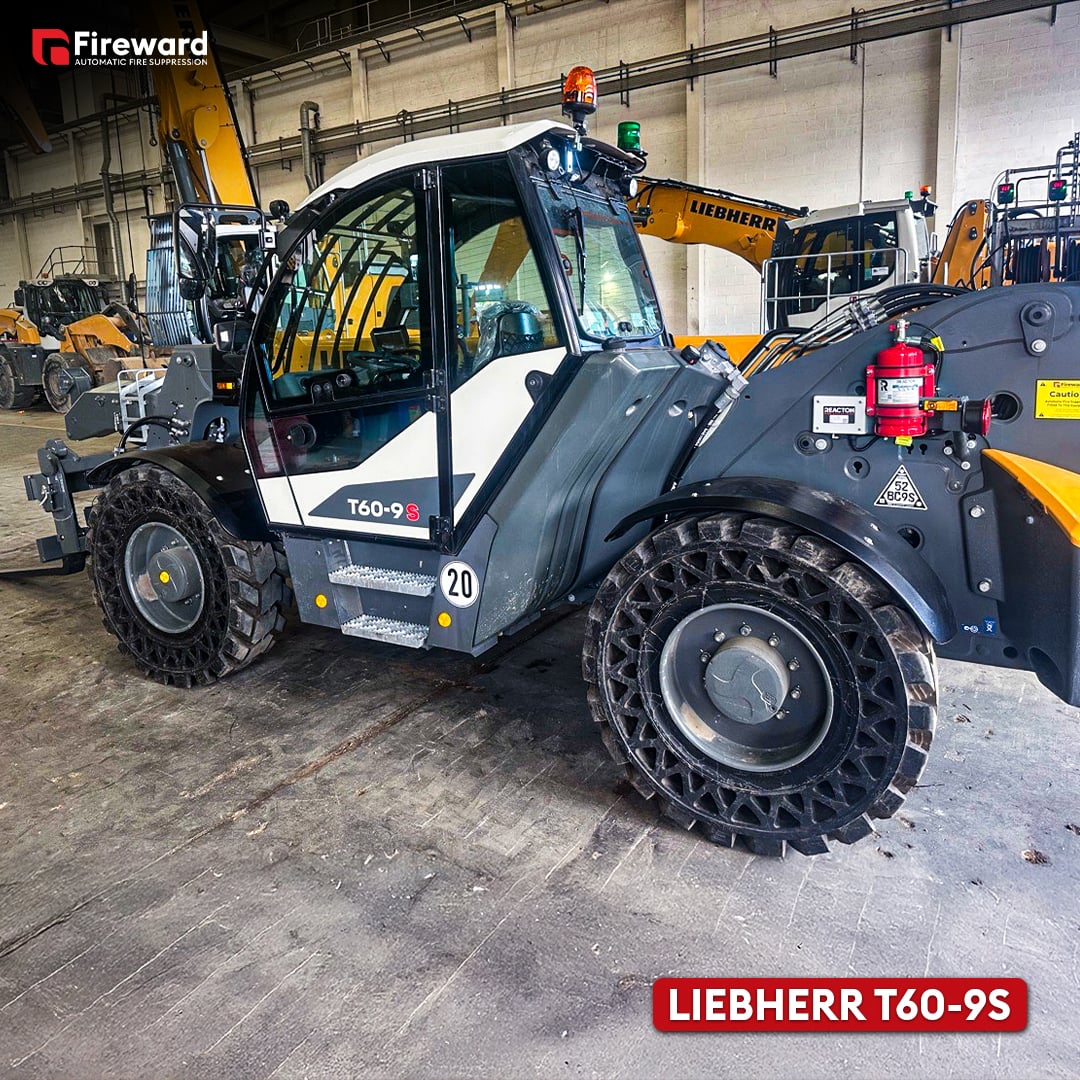
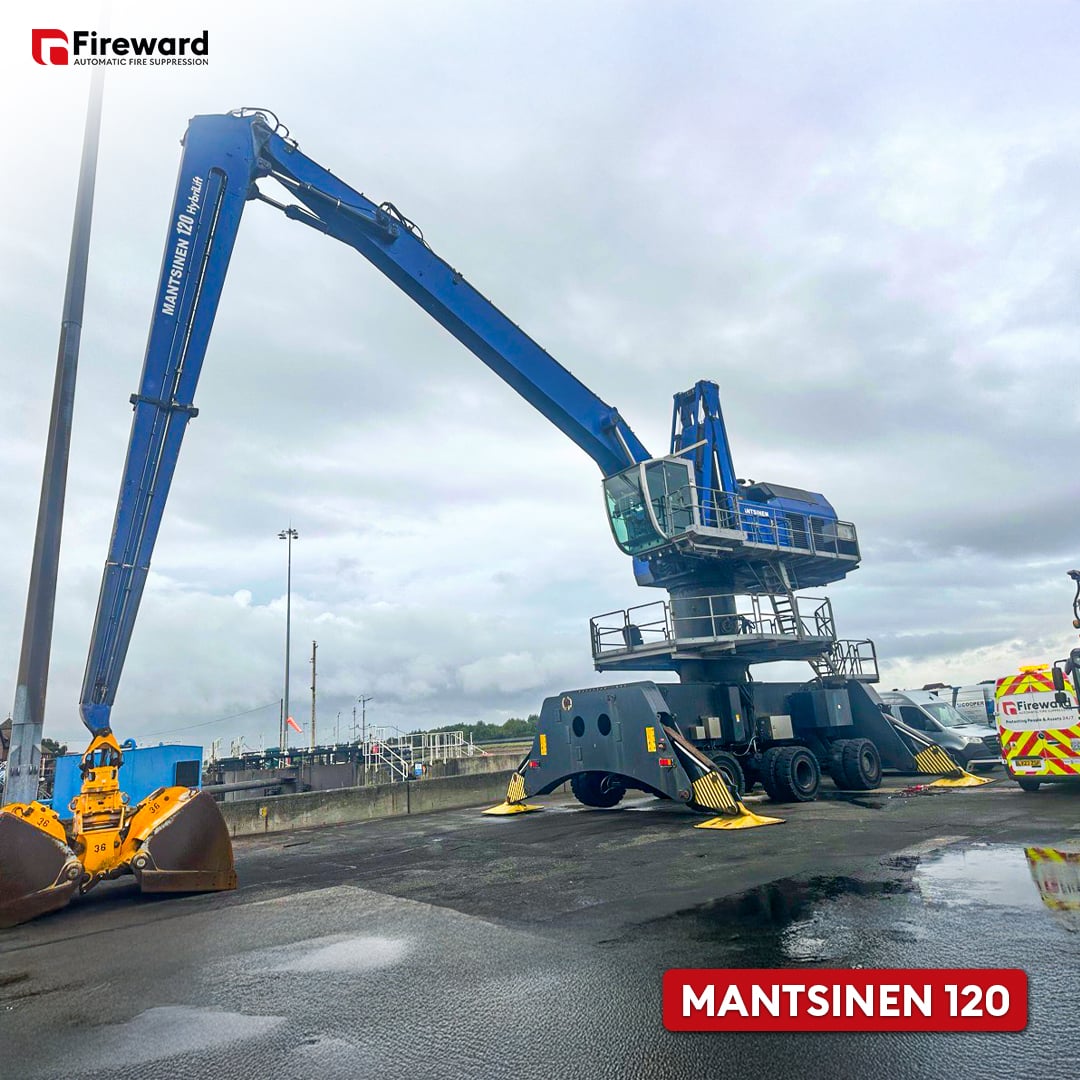
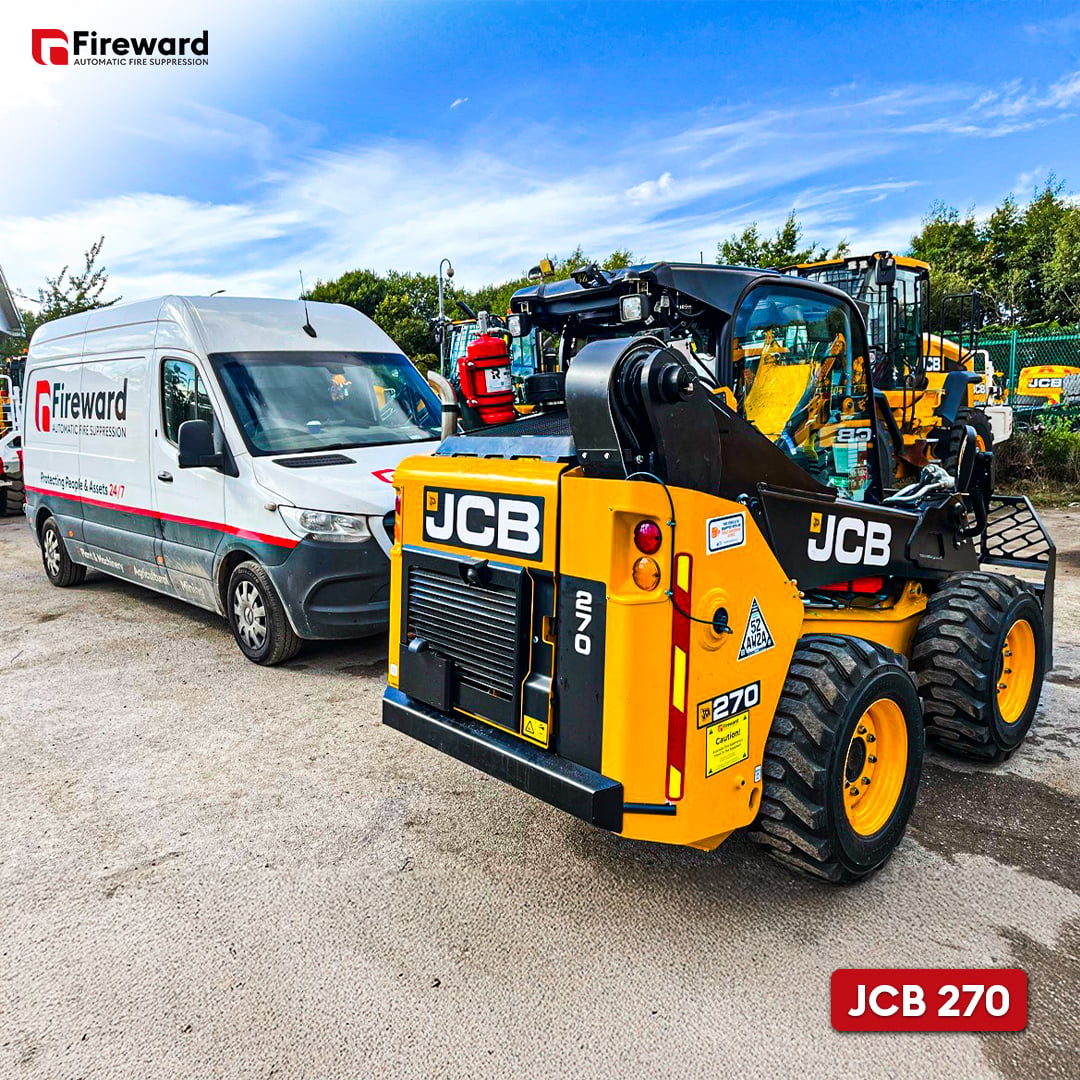
Yes - Fireward provides vehicle fire suppression systems and bespoke solutions for mobile plant and machinery. These systems are fully automatic and certified to the highest industry standards, helping protect vehicles and heavy equipment from fire damage while reducing downtime and operational risk.
Clean agent systems use non-conductive gases like Reacton™ 1230 and FM-200™ that leave no residue, making them ideal for protecting sensitive equipment such as electrical panels and CNC machines. They quickly suppress fires without the collateral damage associated with traditional suppression agents.
Fire Suppression Resources, News and Insights

How Automatic Fire Suppression Protects Road Railer Vehicles

£12.7 Million in Assets Protected from Fire in 2025
41 Real Fire Events. 41 Successful Suppressions.
Protecting History With Fireward’s Clean Agent Suppression
Get in Touch with our Team
If you would like to get in touch with our team, fill out our form with your details or even request for us to give you a call. We will get back to you shortly, alternatively, you can call us on 0800 151 0249.
Are you a new owner of a Fireward System?
Call 0800 151 0249 to register your details and validate your warranty.