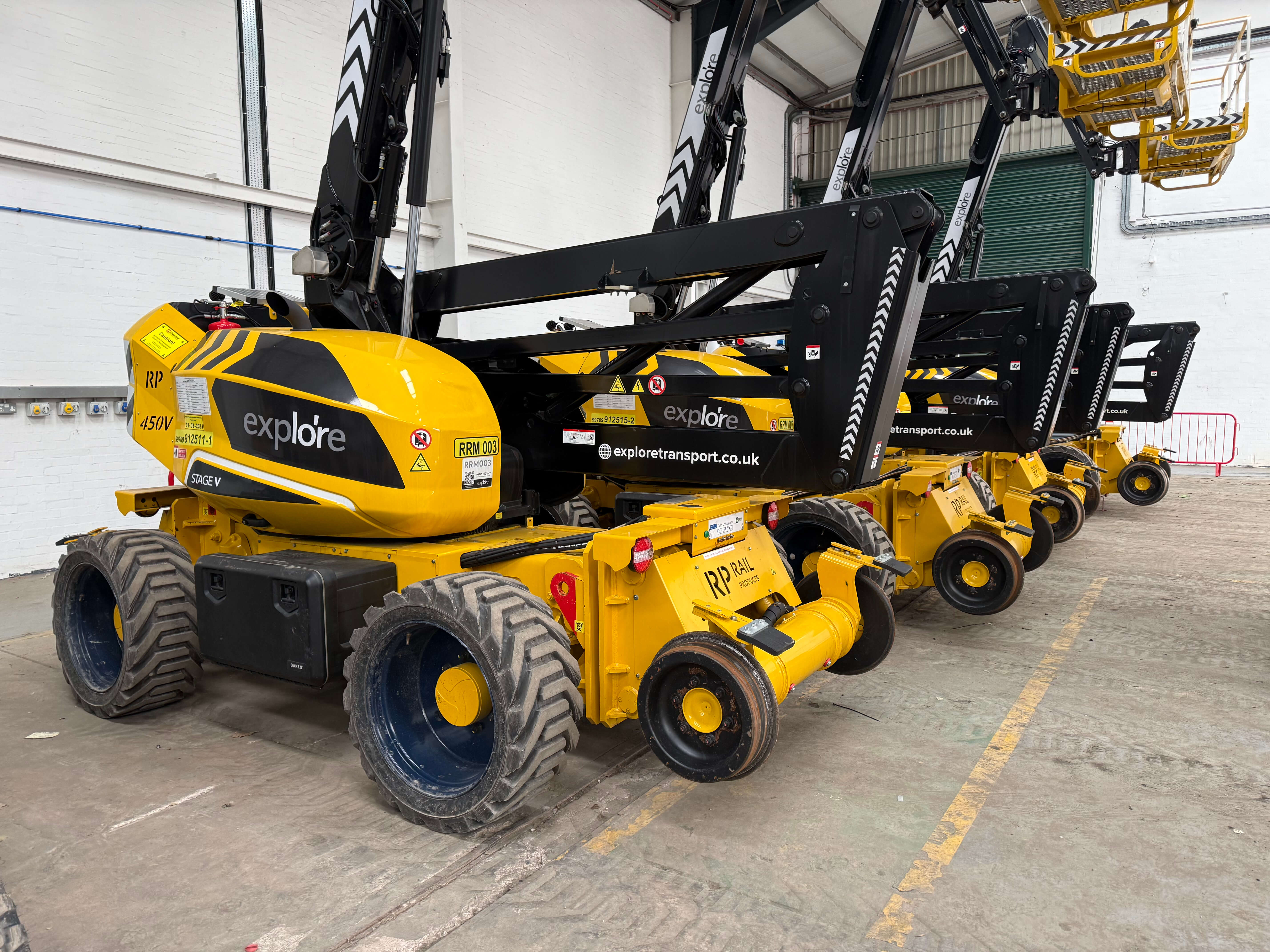
The dual-mode capability of road-railer vehicles (RRVs) and other on track plant plant comes at a cost.
These machines form the backbone of the rail maintenance industry, but powerful engines and complex hydraulic systems pose a significant fire risk. One that can cause millions of pounds in damage, length delays and disruption to thousands of passengers.
Rail plant fire suppression systems are vital if you want to continue using RRVs to inspect infrastructure, lay track, and carry out other maintenance work, even in the event of a fire.
In this article, you’ll learn why these machines are vulnerable and how road-railer automatic fire suppression can protect your investment and timelines.
Why are Road Rail Vehicles at High Risk of Fire?
RRVs are widely used across the UK rail sector due to their versatility. They are as suitable for laying and inspecting track as they are for transporting goods and undertaking maintenance work.
It’s this combination of constant stress, high operating temperatures and an abundance of flammable fluid that creates an ever-present fire risk.
Particular RRV fire risks include:
The nature of rail repair work makes it almost impossible to contain fires. RRVs often operate in remote locations far from emergency services, meaning fires can spread quickly and threaten other equipment and human lives, with no way to suppress the outbreak.
The Consequences of RRV Fires on the UK Rail Network
The impact of a fire on a rail plant can be severe and far-reaching, including:
- Catastrophic asset loss – Many RRVs are highly specialised or bespoke machines, making replacement both expensive and time-consuming.
- Operator safety risks – Fires in remote trackside locations can escalate quickly before emergency services are able to respond.
- Network disruption – Damaged RRVs can lead to maintenance delays, operational downtime and disruption across the rail network.
- Regulatory and financial consequences – Fire incidents can result in insurance claims, investigations, contract reviews and costly liability issues.
Road-railer vehicle fire suppression is essential for protecting operators, assets and the continuity of rail operations.
How Road Rail Vehicle Fire Suppression Works
RRV fire suppression systems automatically detect and suppress fires within seconds, without operator intervention, essential in trackside environments where operators may not always be in the cab.
Our dual-agent systems protect high-risk areas including engine bays and hydraulic systems by using:
- Dry powder to rapidly suppress flames
- Wet chemical to cool surfaces and prevent reignition
Additional safety features include:
- Sounder beacon
- Manual actuator
- Battery isolation
All systems can be retrofitted onto existing road-rail vehicles with minimal downtime.
Protect Your RRVs and OTP with Fireward
Road-railer vehicles are valuable, specialist assets that require reliable fire protection. Fireward supplies automatic fire suppression systems trusted across the UK rail industry to protect RRVs, OTP and other specialist rail equipment.
When you choose Fireward, you benefit from:
- 24/7 automatic fire protection
- Ultra-fast pneumatic fire detection
- Three-year parts and labour warranty
- Certified systems tested to SPCR183, SPCR199 and AS 5062:2016
- Expert installation and ongoing servicing support
Fireward, Protecting People and Assets 24/7.
To find out more about Fireward’s Automatic Fire Suppression systems, get in touch by calling 0800 151 0249 or email at: sales@fireward.co.uk