When a fire can destroy valuable machinery in minutes, detecting and suppressing it in seconds is vital. Automatic fire suppression systems are designed to respond quickly, detecting a fire and activating the appropriate suppression agent without the need for manual intervention.
So, how do fire suppression systems work? In this article, we explain how automatic fire suppression systems detect and respond to fires, the different detection methods available, and how they help protect vehicles, machinery and other high-risk environments.
How does automatic fire suppression work?
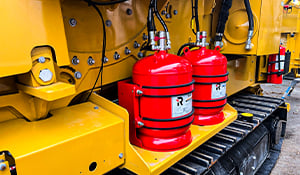
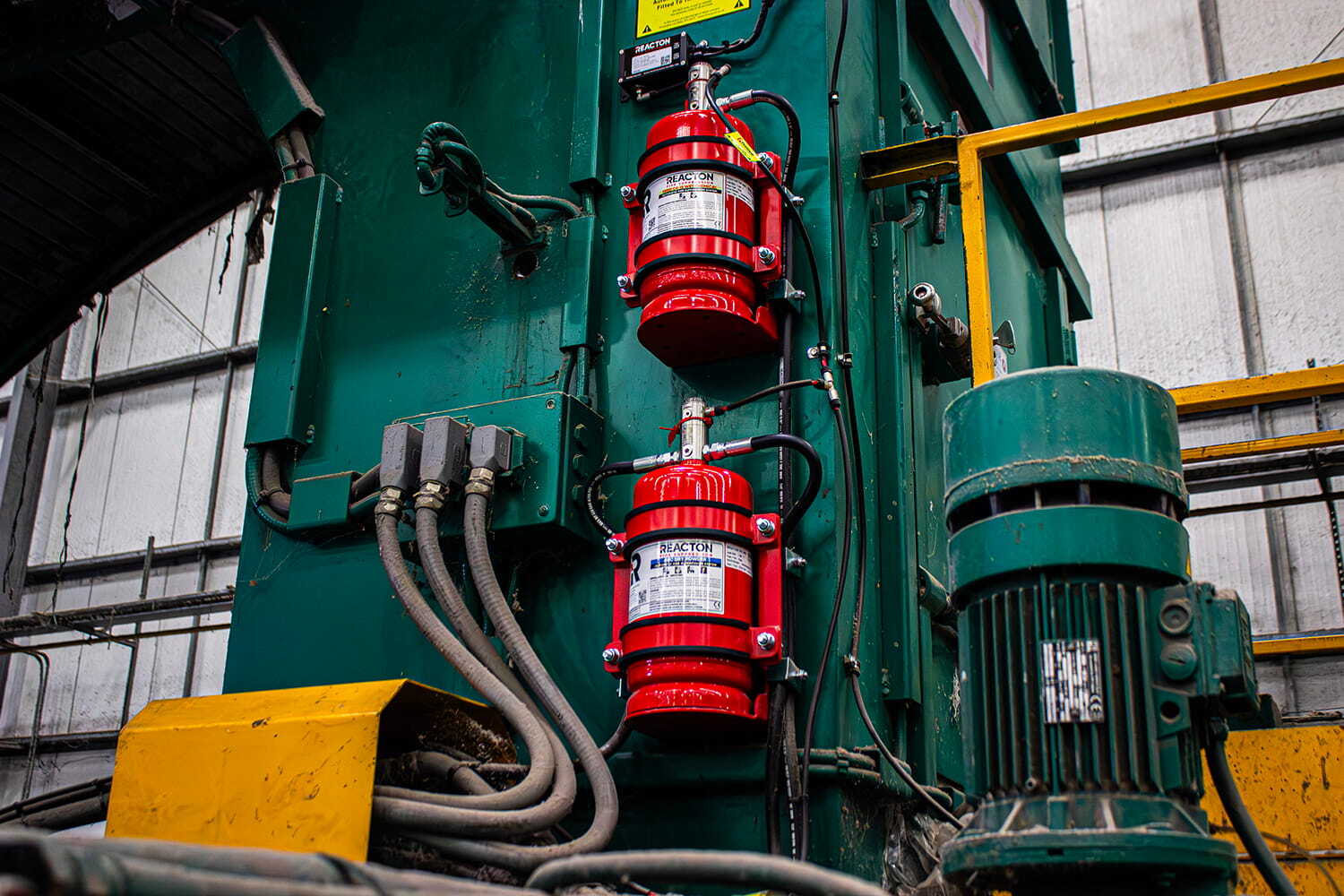
Automatic fire suppression works by detecting the early signs of a fire and activating a suppression system without the need for manual intervention. Systems can be designed for specific vehicles, machinery and other static assets, providing targeted protection for engine bays, hydraulic systems and other high-risk areas.
Unlike a portable fire extinguisher, which relies on an operator being present and trained to use it, these systems operate independently around the clock, regardless of whether the machine is in use or not.
This distinction makes an enormous difference in real-world scenarios where incredibly valuable equipment is at risk. In many cases, whether it’s on a farm or on the railway, by the time an operator notices smoke and reaches for an extinguisher, it’s already too late.
Pneumatic vs electronic linear: What’s the best detection method?
Automatic fire suppression systems typically use one of two detection methods: pneumatic detection and electronic linear detection (also known as Linear Heat Detection, or LHD). Understanding the difference between them will help you make the right choice.
Pneumatic detection
Pneumatic detection uses a pressurised tube, which runs throughout the asset's hazardous areas.
When the tube is exposed to heat or flame exceeding 180°C, it ruptures at the exact point of ignition. This causes an instantaneous pressure drop, which opens the cylinder valve and discharges the suppression agent in seconds. Because the tubing physically contacts the heat source, detection is direct and precise.
Here are the key advantages of pneumatic detection:
- No electrical power required. The system is entirely self-contained and operates independently of the machine's electrical system.
- Ultra-fast response. It typically detects and activates within seconds of ignition.
- Genuine 24/7 protection. The system remains active whether the machine is running or parked, day or night.
- Standalone reliability. If the machine's electrical system fails, the suppression system continues to function.
Electronic linear detection (LHD)
Electronic linear detection uses a heat-sensitive cable rather than pressurised tubing. In the event of a fire, the cable's insulation melts and the inner conductors make contact to create an electrical short circuit. A control module detects the change in resistance, which signals the suppression cylinder to activate.
However, for vehicle and mobile plant protection, it carries several drawbacks:
- Slower detection. LHD systems typically take 20 seconds or more to detect and respond to a fire, compared to the much quicker activation time of pneumatic systems.
- Power dependency. LHD systems require an electrical power supply to function. If the machine's battery is isolated or the electrical system fails, the suppression system is rendered inactive.
At Fireward, we supply both pneumatic and LHD systems and recommend the right solution for each application. However, for the vast majority of vehicle and mobile plant installations, pneumatic detection is our preferred solution.
What agents do automatic fire suppression systems use?
There are three major types of agents that automatic fire suppression systems can use: single-agent, dual-agent and clean-agent.
Single-agent fire suppression systems use dry powder to rapidly smother flames and cut off the oxygen supply. Dry powder is the single most effective agent for rapid fire knockdown. Its particle size creates a large suppression area and even reaches hidden flames.
Dual-agent systems combine a dry-powder cylinder with a wet-chemical cylinder into a single integrated system. The two agents work in tandem. The dry powder discharges first, rapidly knocking down the fire and cutting the oxygen supply. The wet chemical follows, delivering a prolonged cooling effect on hot surfaces that could reignite the fire.
Clean-agent systems use specially formulated gaseous agents rather than powder or chemical. Fireward's clean agent systems use Reacton™ 1230 fluorinated ketone and FM-200™ (HFC-227ea). Both agents are stored as liquids and discharged as gases, suppressing fires either by absorbing heat from the flame or by interrupting the combustion chain reaction.
Unlike single- and dual-agent systems, clean-agent systems leave no residue. This makes them essential in protecting sensitive electrical components where the suppression agent itself could cause as much damage as the fire, such as electrical panels, control systems and CNC machinery.
Find the right fire suppression system for your application
Understanding how fire suppression systems work is an important first step, but the right system will depend on the asset being protected, the fire risks involved and the operating environment.
Fireward provides automatic fire suppression systems for vehicles, mobile plant, machinery and other specialist assets, with systems installed on more than 10,000 assets across the UK.
Explore our fire suppression systems to learn more about the different solutions available, or speak to our team for advice on the right system for your application.

.jpg)